Can You Reverse Gum Disease at Home? The Honest Answer

Quick answer: The early stage, gingivitis, often improves at home once plaque is removed from the gum line every day, including between the teeth. The later stage, where bone has pulled back, and gums that have already receded cannot be fixed by any home remedy. If your gums still bleed after two to three weeks of careful daily cleaning, that usually means hardened deposits under the gum and you need a dentist.↗ Share on X
The honest answer depends on which stage you have. The early stage — red, puffy gums that bleed when you brush — is called gingivitis, and it often improves a lot at home once the plaque comes off the gum line every single day. The later stage, where the bone around the tooth has already pulled back, is called periodontitis, and no rinse, oil or paste at home rebuilds that bone. Gums that have already receded do not grow back on their own either. So the useful question is not "can I reverse it naturally" but "which part is still reversible, and what actually moves it."
Below is what tends to help, what wastes your time, and the signs that mean you should stop experimenting and see a dentist.
What is the difference between gingivitis and periodontitis?
 Natural Ways to Strengthen Loose Teeth from Gum Disease →
 How to Stop Bleeding Gums Safely on Blood Thinners →
 Preventing Gum Disease with a Weak Immune System Naturally →
Think of it as two different problems with the same starting point.
Gingivitis is inflammation of the gum only. The gum is irritated by the soft, sticky film of bacteria that builds up along the tooth every day. Nothing under the gum has been permanently damaged yet. Take the film off consistently and the inflammation usually settles down over days to weeks.
Periodontitis is when that inflammation has gone deeper and the bone holding the tooth has started to shrink away. Pockets form between tooth and gum. Hard deposits (tartar, also called calculus) sit under the gum where no brush reaches. This stage needs a professional cleaning below the gum line. There is no home version of that.
Here is the practical difference:
| Sign | Usually early (gingivitis) | Needs a dentist soon (likely deeper) |
|---|---|---|
| Bleeding when brushing | Yes, and it fades with better cleaning | Yes, and it keeps going after 2–3 weeks |
| Gum color | Red at the edge only | Dark red or purplish, swollen, shiny |
| Bad breath | Comes and goes | Constant, with a bad taste |
| Teeth | Feel solid | Feel loose or have shifted position |
| Gum line | In its normal place | Pulled back, teeth look longer |
| Pus or abscess | No | Yes — see a dentist without waiting |
Simple health wins in your inbox. No hype.
Which home habits actually reduce bleeding gums?
Affiliate link. We may earn a commission on purchases, at no extra cost to you.
This content is informational and is not a substitute for medical advice. Supplements do not cure or treat diseases.
Ranked by how much difference they tend to make:
1. Clean between the teeth once a day. Brushing only reaches about three of the five surfaces of a tooth. The gum bleeds most where the toothbrush never goes. Floss works; small interdental brushes work and are easier for many people. Pick whichever one you will actually use every night.
2. Change how you brush, not how hard. Aim the bristles at a slight angle into the gum line, not straight at the tooth face. Small movements, light pressure, two minutes. Hard scrubbing does not remove more film — it wears the gum down.
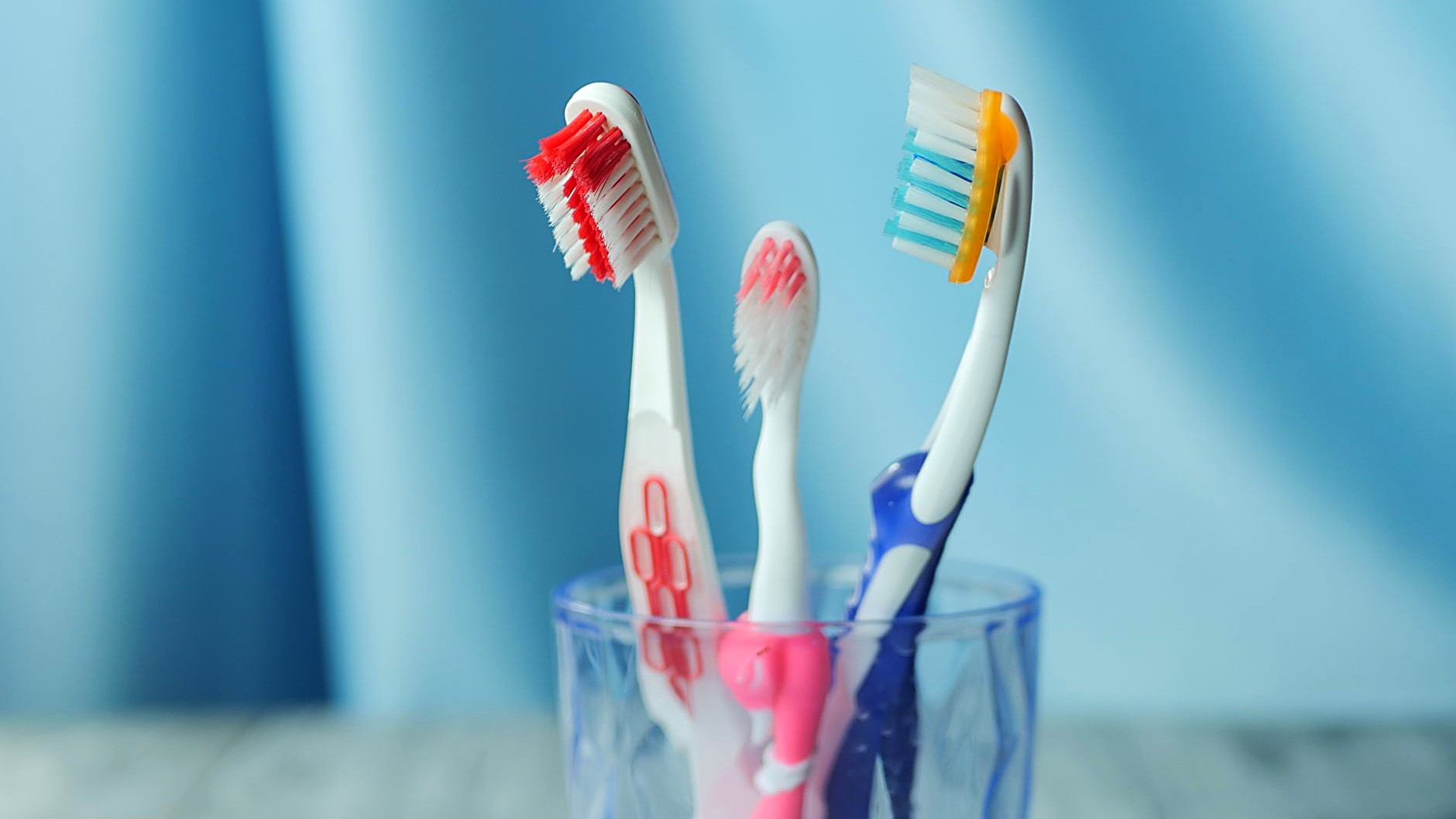
3. Use a soft brush and replace it. A flattened brush head slides over the gum line instead of cleaning it. Replace it when the bristles splay, roughly every three months.
4. Stop smoking or vaping if you do. Nicotine narrows the small blood vessels in the gum. That can hide bleeding while the damage continues underneath, which is why smokers often find out later. This is one of the biggest single factors you control.
5. Get the tartar off. Once the film hardens, no brush removes it. It has to be scraped off professionally. Until it is gone, the gum next to it stays inflamed no matter what you rinse with.
6. Look at your sugar and snacking pattern. Not just how much sugar, but how often. Frequent sips and nibbles keep feeding the bacteria all day.
7. Manage blood sugar if you have diabetes. Gum disease and blood sugar push each other in a circle. If yours is not well controlled, tell your dentist and your doctor about the gum problem — the two conditions are treated better together.
Which "natural cures" are mostly myths?
 Protecting Gums During Pregnancy: Simple Home Care Tips →
 Natural Mouthwash Recipes to Soothe Bleeding Gums at Home →
 How to Pick the Right Toothbrush for Bleeding Gums →
Myth: oil pulling cures gum disease. Swishing oil may leave your mouth feeling fresh. It does not remove hardened tartar and it does not replace cleaning between the teeth. As an extra, it is harmless. As a replacement, it costs you time while the problem continues.
Myth: hydrogen peroxide rinses will fix it. Diluted peroxide is sometimes recommended by a dentist for short, specific periods. Using it daily on your own can irritate the soft tissue. Do not make it a permanent habit without being told to.
Myth: baking soda is a safe everyday scrub. Used gently in a toothpaste it is fine. Used as a gritty paste with pressure, it adds abrasion to gums that are already pulling back.
Myth: bleeding means you should brush that spot less. It is usually the opposite. Gums bleed where they are inflamed, and they are inflamed where the film is sitting. Gentle, consistent cleaning of that exact spot is what calms it. Bleeding that continues past two to three weeks of good cleaning is the signal to get it looked at.
Myth: receding gums grow back with a home remedy. They do not. What you can do is stop the recession from getting worse, and a dentist can discuss covering exposed roots surgically if it is severe. Anyone promising natural regrowth is selling something.
Myth: a stronger mouthwash is the answer. Rinsing moves liquid over the surface; it does not disturb a sticky film that is attached. Mouthwash is a finishing touch, not the tool.
What does a realistic two-week plan look like?
This is a routine to try while you wait for a dental appointment — not a substitute for one.
1. Days 1–2: Buy a soft-bristled brush and one interdental tool. Note in your phone which teeth bleed. That list is your map.
2. Every night: Clean between all the teeth first, then brush for two minutes at the gum line. Doing it in that order means you finish where the fluoride toothpaste stays.
3. Every morning: Two minutes, same angle, light pressure.
4. After meals: Water instead of another sugary drink. Cut the number of eating occasions rather than obsessing over one dessert.
5. Day 7: Check your list. In early gingivitis, most spots bleed noticeably less by now.
6. Day 14: Check again. Spots still bleeding at this point almost always have tartar under the gum, and that is a cleaning appointment, not a technique problem.
Keep expectations honest: this routine addresses inflammation caused by daily film. It does nothing about deposits already hardened under the gum, and results vary from person to person.
When should you stop trying home care and call a dentist?
Book an appointment without waiting if you have any of these:
- Pus around a tooth or gum, or a swelling on the gum or face
- A tooth that feels loose, or teeth that have moved or changed how they meet
- Gums that keep bleeding after two to three weeks of careful daily cleaning
- Constant bad taste or bad breath that does not clear
- Pain when chewing, or gums pulling back fast
- You are pregnant, have diabetes, take a blood thinner, or have a condition or medication that affects healing — these change both risk and treatment
Also see a dentist if you simply cannot tell which stage you have. Depth of the gum pocket is measured with a small probe in a couple of minutes, and that measurement is what separates "keep doing what you are doing" from "you need treatment below the gum line."
This article is general information, not a diagnosis or a treatment plan for your mouth. A dentist or dental hygienist who can actually look at your gums is the only one who can tell you what stage you are at.
Your next step
Tonight, do one thing: clean between every tooth, slowly, and write down which spots bleed. Do it again on day seven. That single list tells you more than any rinse — if the bleeding shrinks, your technique was the missing piece; if the same spots keep bleeding, you have your answer about needing a professional cleaning, and you can walk in and point straight at them.
FAQ
How long should it take for bleeding gums to improve?
With early gingivitis, most people notice clearly less bleeding within one to two weeks of cleaning between the teeth daily and brushing gently at the gum line. Spots still bleeding after two to three weeks usually have hardened tartar underneath, which only a dentist or hygienist can remove.
Do receding gums grow back naturally?
No. Gum tissue that has pulled back does not regrow on its own or with home remedies. You can stop the recession from getting worse by cleaning gently and correctly, and a dentist can discuss surgical options for covering exposed roots if the case is severe.
Is oil pulling or mouthwash enough on its own?
No. Rinsing and swishing move liquid over the surface but do not disturb the sticky film attached to the tooth or remove hardened tartar. They can be a finishing touch, never a replacement for brushing at the gum line and cleaning between the teeth.
Simple health wins in your inbox. No hype.
Educational content, not medical advice. Talk to your doctor before making health decisions.