Swollen Gums: 5 Home Remedy Mistakes You Should Stop
Quick answer: With swollen gums, the remedy is usually fine and the method is the problem: salt water too hot or too salty, undiluted hydrogen peroxide, brushing harder instead of gentler, avoiding the sore spot, and using rinses to mask infection pain. Mild inflammation often settles within one to two weeks of gentle, consistent cleaning; swelling that lasts longer needs a dentist.↗ Share on X
If your gums are swollen and bleeding, the home remedy itself is rarely the problem — the way most people use it is. The five mistakes below are the ones that keep gums sore for weeks: rinsing with salt water that is too hot or too salty, using hydrogen peroxide straight from the bottle, brushing harder instead of better, skipping the sore spot altogether, and using rinses to quiet pain that is actually a sign of infection. Fix those five and most mild gum swelling settles down within one to two weeks of consistent care.
This is general information, not dental advice. Swollen gums that do not improve in about two weeks, or that come with any of the warning signs listed near the end, need to be seen by a dentist.
Mistake 1: Salt water rinses done wrong
 Swollen Gums at Home: What Helps and What Wastes Time →
 Can You Reverse Gum Disease at Home? The Honest Answer →
 Bleeding Gums: What Heals at Home, What Needs a Dentist →
Warm salt water is the most useful thing in your kitchen for sore gums. It is also the one people overdo.
How to do it properly:
- Half a teaspoon of salt in a cup of warm water. Not a heaping spoon. More salt does not do more work, it just irritates the tissue.
- Warm, never hot. Hot water on an inflamed gum makes the swelling worse and can scald thin tissue.
- Swish gently for about 30 seconds, then let it fall out of your mouth. Do not gargle hard or swirl forcefully; you are soothing the gum, not power washing it.
- Two or three times a day, usually after meals. Every hour all day long dries the mouth out, and a dry mouth makes gum problems worse, not better.
Why the over-use backfires: saliva is your mouth's own defense. Rinse constantly with anything salty or alcoholic and you wash it away faster than your body replaces it.
Simple health wins in your inbox. No hype.
Mistake 2: Using hydrogen peroxide straight from the bottle
Affiliate link. We may earn a commission on purchases, at no extra cost to you.
This content is informational and is not a substitute for medical advice. Supplements do not cure or treat diseases.
Peroxide is common in bathroom cabinets and commonly misused on gums.
| What people do | What happens | Safer approach |
|---|---|---|
| Rinse with peroxide undiluted | Burns the gum surface, turns tissue white, slows healing | Dilute it half and half with water if you use it at all |
| Use it daily for weeks | Irritates tissue and can upset the normal balance in the mouth | A few days at most, then stop |
| Swallow some of it | Stomach upset | Spit it all out, never swallow |
| Put it on an open sore | Pain, delayed healing | Ask a dentist before using it on broken tissue |
If your gum turns white, stings sharply, or peels after a rinse, that is a chemical burn, not healing. Stop the product and go back to plain warm salt water.
The same caution applies to undiluted apple cider vinegar, lemon juice, and alcohol. Acid on inflamed gums also wears enamel at the gumline, and that damage does not grow back.
Mistake 3: Brushing harder instead of brushing better
 How to Stop Gums Bleeding at Night: Simple Safe Tips for Better Sleep →
 Is Receding Gums Treatment at Home Worth It? A Simple Breakdown →
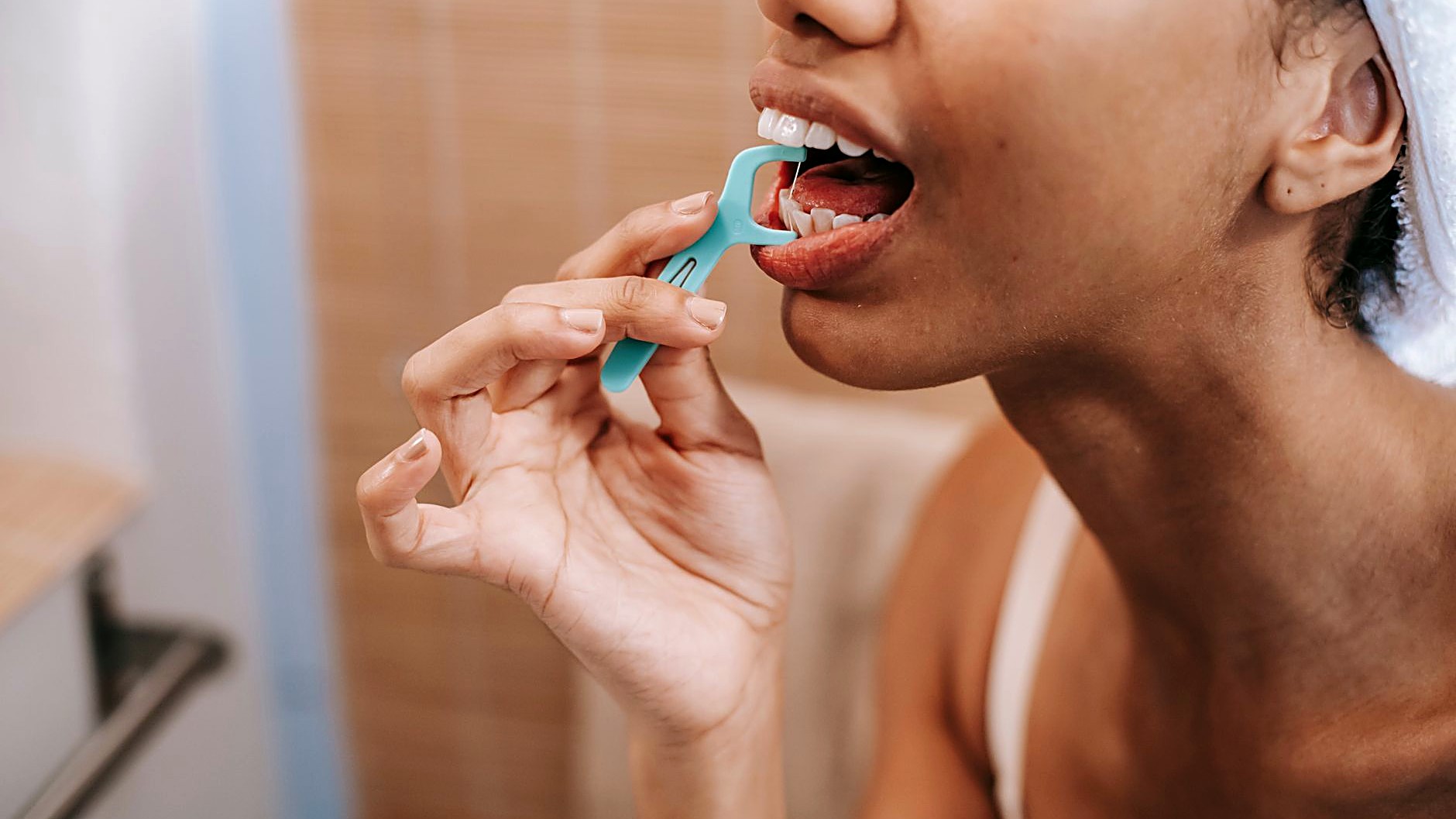 How to Stop Gums Bleeding After Flossing in 3 Easy Steps →
When gums bleed, two instincts fight each other. One says scrub the blood away. The other says stop touching it. Both are wrong.
Hard scrubbing with a firm brush pushes the gum back off the tooth. That is one of the ways gums recede, and receded gum tissue does not regrow on its own at home — no rinse, oil, or paste rebuilds it. Whatever you still have is worth protecting.
What to do instead:
1. Use a soft bristle brush. Medium and hard brushes offer no benefit for plaque removal and plenty of risk to the gumline.
2. Hold the brush at roughly 45 degrees to the gum, so the bristle tips reach just under the gum edge.
3. Use small circles or tiny back-and-forth wiggles, not long sawing strokes.
4. Hold the brush with two fingers, like a pen. You cannot press hard with two fingers.
5. Two minutes, twice a day. Most people brush for under a minute and think it was two.
6. Replace the brush when the bristles splay out, or about every three months.
If the bristles on your brush are bent sideways after a few weeks, you are pressing too hard. That flattened brush is the clearest evidence you will get.
Mistake 4: Avoiding the sore, bleeding spot
This is the mistake that turns a week of irritation into months of it.
Gums that bleed when touched are usually inflamed from plaque sitting along the gumline. Plaque is soft and sticky, and only cleaning removes it. Skip that area because it hurts and the plaque hardens into tartar, which a brush cannot remove at all. The swelling stays, and now it needs a dental cleaning to fix.
So clean the sore area gently but clean it. Expect a little bleeding for the first several days. Bleeding that gets less each day usually means the gum is settling down. Bleeding that gets worse, or that keeps going for more than a couple of weeks of good cleaning, means it is time for the dentist.
Cleaning between the teeth matters just as much. A brush does not reach between teeth, and that gap is where gum inflammation usually starts. Floss, small interdental brushes, or a water flosser all work — the one that works is the one you will actually use every day. Slide floss down gently and curve it against the side of the tooth, rather than snapping it straight into the gum.
Mistake 5: Using remedies to mask pain that is a warning sign
This is the serious one. Home care is for mild, general gum soreness and bleeding. It is not for infection.
Stop the home remedies and get dental care promptly if you have:
- Swelling of the face, jaw, or under the eye
- A bump on the gum that leaks pus or tastes foul
- Fever along with mouth pain
- A tooth that has become loose, or bite that suddenly feels different
- Severe, throbbing pain, especially pain that wakes you at night
- Bleeding that will not stop, or heavy bleeding with no obvious cause
- Swelling concentrated around a single tooth
Call the same day for facial swelling, fever, or trouble swallowing or breathing. Those can signal a spreading infection, which is a medical problem, not a cosmetic one.
Also tell a dentist or doctor if you take blood thinners, are pregnant, have diabetes, or have a condition that affects your immune system. All of those change how gums behave and how fast they heal, and they change what treatment is appropriate.
What a realistic two-week plan looks like
No one can promise you an outcome, and anyone who does is selling something. But here is the routine that gives mild gum inflammation its best chance to calm down:
| Time | What to do |
|---|---|
| Morning | Soft brush, 2 minutes, gentle circles at the gumline |
| After meals | Warm salt water rinse, gentle, 30 seconds |
| Evening | Clean between every tooth, then brush 2 minutes |
| Daily | Water throughout the day; less sugar, fewer sweet drinks |
| Daily | No smoking or vaping — nicotine slows gum healing measurably |
| Day 14 | Honest check: better, the same, or worse? |
Take a photo of the worst area on day one. Memory is unreliable about slow change; a photo is not.
At the two-week mark, if the gums look and feel better, keep doing exactly this. If they look the same or worse, stop experimenting with new remedies. Hardened tartar below the gumline is the most common reason home care stalls, and removing it requires a professional cleaning. More rinses will not reach it.
What home remedies cannot do
Clear expectations save money:
- They do not regrow gum tissue that has already receded
- They do not remove tartar once it has hardened
- They do not cure gum disease that has reached the bone
- They do not fix the real cause of a cracked tooth, a failing filling, or an abscess
- They do not replace a cleaning appointment that is overdue
What they do well is control the soft plaque that causes everyday inflammation. That is a real and worthwhile job — it is just a smaller job than the internet suggests.
Your next step tonight
Do one thing before bed: check your toothbrush. If the bristles are bent, or it is labeled medium or hard, set it aside and use a soft one. Then brush the sore area gently for two full minutes with a timer, and clean between those teeth once, slowly.
Take the photo. Mark two weeks from today on your calendar. If the gums are not clearly better by that date, book a dental appointment instead of buying another rinse.
FAQ
How much salt should I use in a rinse for swollen gums?
About half a teaspoon of salt in a cup of warm water, swished gently for 30 seconds, two or three times a day. More salt and hotter water irritate inflamed tissue rather than helping, and rinsing all day long dries out the saliva that protects your mouth.
Should I stop brushing if my gums bleed?
No. Bleeding gums usually mean plaque is sitting at the gumline, and only cleaning removes it. Brush the area gently with a soft brush and clean between the teeth. Bleeding that decreases each day is a good sign; bleeding that worsens or lasts beyond about two weeks needs a dental visit.
Can receding gums grow back with home remedies?
No rinse, oil, or paste regrows gum tissue that has already receded, and hardened tartar below the gumline cannot be brushed away. Home care controls the soft plaque that causes everyday inflammation; anything beyond that requires a professional assessment.
Simple health wins in your inbox. No hype.
Educational content, not medical advice. Talk to your doctor before making health decisions.