Can Ringing in the Ears Be a Sign of High Blood Pressure?
Quick answer: Sometimes. Ringing that whooshes in time with your heartbeat can be linked to high blood pressure, but ringing alone does not prove it. Measure your pressure and see a doctor, and get urgent care for sudden hearing loss.↗ Share on X
Yes, ringing in the ears can be linked to high blood pressure, but it is not the most common cause, and ringing alone does not prove you have high blood pressure. The link is strongest when the sound is a whooshing or pulse-like beat that matches your heartbeat. That type is called pulsatile tinnitus, and it should always be checked by a doctor. The only way to know your blood pressure is to measure it. If you have ringing and you have never had your pressure checked, book a visit this week.
This article is general information, not medical advice. It cannot diagnose you. If you have sudden hearing loss, a severe headache, chest pain, or weakness on one side of the body, do not wait. Call emergency services.
What kind of ringing points to blood pressure?
 Nighttime Racing Mind: Why It Happens and How to Slow It Down →
 How to Use Baking Soda Safely to Reduce Gum Bleeding →
 Ringing Ears After Not Drinking Enough? What It Really Means →
Not all tinnitus sounds the same. The sound you hear gives clues.
| What you hear | What it may suggest | What to do |
|---|---|---|
| Steady high beep or hiss in both ears | Often noise damage, age, or stress | Book a hearing test |
| Whooshing or thumping that matches your pulse | Blood flow near the ear; can be linked to high blood pressure, anemia, or vessel problems | See a doctor soon |
| Ringing in one ear only, with muffled hearing | Possible sudden hearing loss | Get medical care within a day or two |
| Clicking or crackling | Often ear muscles or jaw joint | Mention it to your doctor |
| Ringing that starts after a new medicine | Possible medicine effect | Call the prescriber; do not stop on your own |
If your ringing speeds up when you climb stairs, get upset, or drink coffee, and it slows when you rest, that is another small clue that blood flow plays a part.
Simple health wins in your inbox. No hype.
How can high blood pressure change the sound you hear?
Affiliate link. We may earn a commission on purchases, at no extra cost to you.
This content is informational and is not a substitute for medical advice. Supplements do not cure or treat diseases.
The inner ear is full of very tiny blood vessels. They feed the cells that turn sound into signals for the brain. When blood pressure is too high for a long time, these vessels can be under strain. Blood may flow harder or less smoothly. That can make you hear your own blood moving (pulsatile tinnitus) or may add to hearing damage over the years.
The exact link is still being studied, and doctors do not agree on how strong it is in every person. That is why a proper check matters more than a guess.
Other things can make both problems worse together:
- Too much salt
- Smoking
- Heavy drinking
- Lots of caffeine
- Poor sleep
- Stress and anxiety
- Being overweight
- Diabetes or high cholesterol
When is ringing in the ears an emergency?
 Can Jaw Clenching Cause Ear Ringing? Signs and Fixes →
 Can Stress Cause Ringing in One Ear? What Actually Helps →
 Why Your Ears Ring Louder at Night and How to Quiet It →
Get urgent care (emergency room or same-day visit) if you have any of these:
1. Sudden hearing loss in one ear over hours or a day, with or without ringing. Early treatment gives the best chance of recovery, so do not wait it out.
2. Ringing with a very high blood pressure reading. In the United States, a reading of 180/120 or higher with symptoms such as chest pain, shortness of breath, back pain, numbness, weakness, vision change, or trouble speaking is an emergency. Call 911 or your local emergency number.
3. Ringing with dizziness and vomiting that does not stop, or a spinning feeling that makes it hard to stand.
4. Ringing after a head injury.
5. A new, severe headache with ringing.
If none of these apply, you should still see a doctor within one to two weeks, especially if the ringing is new, in one ear only, or beats like a pulse.
How do you check your blood pressure at home?
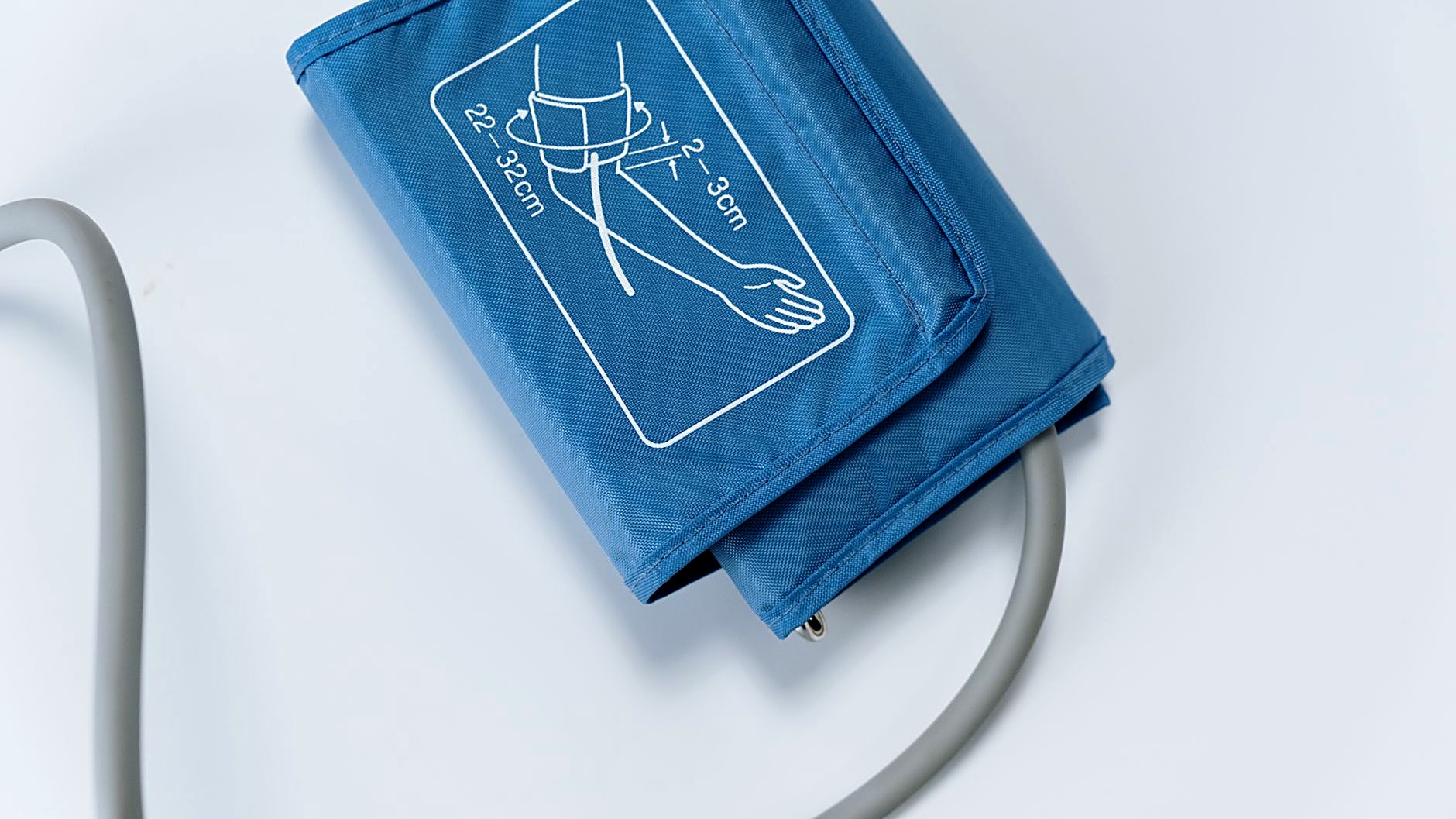
A home monitor is cheap and useful. Use an upper-arm cuff, not a wrist one, and look for the cuff size that fits your arm.
1. Sit quietly for 5 minutes. Back straight, feet flat, arm resting at heart level.
2. Do not smoke, drink coffee, or exercise for 30 minutes before.
3. Take two readings, one minute apart. Do it twice a day, morning and evening, for a week.
4. Write down every number with the date and time. Note if your ringing was loud, quiet, or the same.
5. Bring the notebook to the doctor.
For most adults, the common guide is that a reading under 120/80 is normal. A reading of 130/80 or more, repeated, is considered high by many guidelines, and your doctor will tell you what applies to you. One high number does not mean you have high blood pressure, because stress and pain can raise it for a short time. That is why a week of readings is more useful than one.
What can you do today to calm the ringing?
These steps are safe for most people, and they also help blood pressure. They are not a cure, and they do not replace a visit to the doctor.
1. Cut back on salt. Avoid chips, instant noodles, canned soup, deli meats, and fast food for a week. Read the sodium on the label.
2. Limit caffeine and alcohol. Try cutting your coffee in half for two weeks and see if the ringing changes.
3. Stop smoking. Nicotine tightens blood vessels. Ask your doctor about quitting aids.
4. Walk 20 to 30 minutes a day. Easy walking improves blood flow and often helps sleep.
5. Use soft background sound at night. A fan, quiet rain sounds, or low music makes the ringing less noticeable.
6. Protect your ears. Avoid loud music, loud tools, and loud events without earplugs.
7. Wind down before bed. Slow breathing for five minutes (in for 4 counts, out for 6) can lower stress and sometimes makes ringing feel quieter.
Keep a short diary: what you ate, how you slept, your readings, and how loud the ringing was from 1 to 10. After two weeks you may see a pattern that helps your doctor.
Can your medicines cause ringing?
Yes. Some medicines can cause or worsen tinnitus, and some blood pressure drugs are on the list. Certain water pills (loop diuretics) at high doses, high doses of aspirin and some other pain relievers, some antibiotics, and some cancer drugs are known examples.
Do not stop any medicine on your own. Stopping a blood pressure drug suddenly can be dangerous. Instead, write down when the ringing started and when you began or changed any medicine, and ask your doctor or pharmacist if there is a link and whether a change is possible.
What will the doctor do?
A typical visit looks like this:
1. Questions. When did it start? One ear or both? Does it beat with your pulse? Any hearing loss, dizziness, or medicine changes?
2. Blood pressure check and often a look at your heart and neck.
3. Ear exam. Earwax, infection, or fluid can be found with a simple look.
4. Hearing test (audiogram). It shows if you have hearing loss that you did not notice.
5. Blood tests when needed, for example for anemia, thyroid, sugar, or cholesterol.
6. Imaging (such as a scan) if you have pulsatile tinnitus or ringing in just one ear, to look at blood vessels and the ear structures.
Depending on the findings, you may be sent to an ear, nose and throat doctor (ENT) or an audiologist, or to a cardiologist.
Will the ringing go away if I lower my blood pressure?
Sometimes yes, sometimes no. When the ringing is tied to blood flow and the cause is treated, it may fade or become softer. When tinnitus comes from long-term hearing damage, lowering blood pressure may not remove it, but it still protects your heart, brain, kidneys, and eyes, so it is worth doing. Do not expect an exact result. Ask your doctor what is likely in your case.
Your next step this week
Do three things. First, buy or borrow an upper-arm blood pressure monitor and write down your readings twice a day for seven days. Second, note the type of sound you hear (steady beep, whoosh with your pulse, one ear or both) and when it is worse. Third, call your doctor or a local clinic and book an appointment, bringing your notebook and a list of every medicine and supplement you take. If the ringing suddenly gets much worse, you lose hearing, or your blood pressure reads 180/120 or higher with symptoms, go to emergency care right away.
FAQ
What kind of tinnitus is linked to high blood pressure?
Pulsatile tinnitus, a whooshing or thumping that matches your heartbeat. It should always be checked by a doctor.
When is ringing in the ears an emergency?
Sudden hearing loss in one ear, or ringing with chest pain, severe headache, weakness, vision change, or a reading of 180/120 or higher with symptoms.
Can blood pressure medicine cause tinnitus?
Some medicines, such as certain water pills at high doses, can. Never stop a blood pressure drug on your own; ask your doctor or pharmacist.
Simple health wins in your inbox. No hype.
Educational content, not medical advice. Talk to your doctor before making health decisions.